
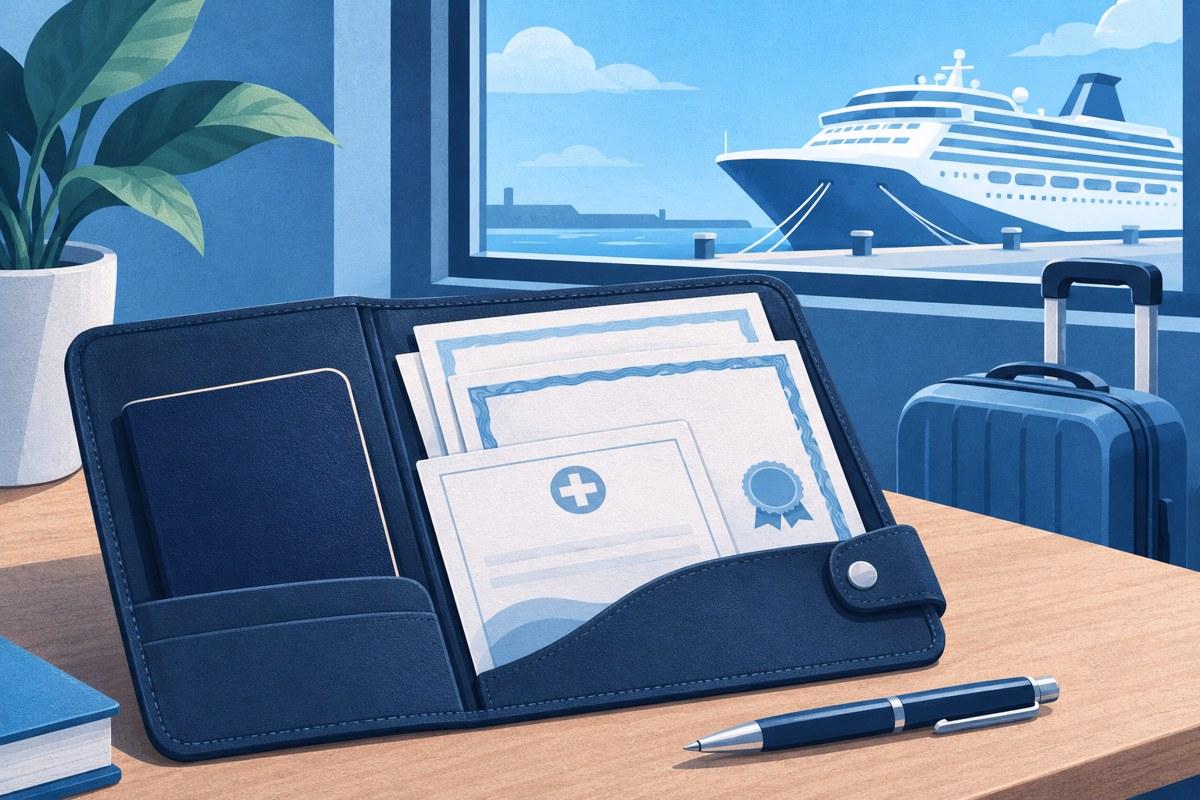
Researched on 20 November 2026 using IMO training guidance, the UK Maritime and Coastguard Agency, Royal Caribbean Group, the US Department of State and ILO guidance. UK and employer procedures are identified examples; acceptance depends on your assignment.
1. Training: confirm the exact course and provider
STCW means Standards of Training, Certification and Watchkeeping for Seafarers: the international framework for seafarer training. Ask which safety and security courses you need, which certificates you already hold are accepted, and what must be completed ashore before joining. Passenger-ship training depends on duties; deck, engineering and other specialist roles can need additional qualifications. Get the accepted course titles, approval authority, provider and any refresher deadlines in writing before paying.
2. Medicals: check both flag and company acceptance
Ask which seafarer medical certificate the ship’s flag state—the country of registration—accepts, and whether a separate company pre-employment medical examination (PEME) is required. ENG1 is a UK seafarer medical certificate, not a universal cruise requirement; UK ships also accept specified equivalents. Royal Caribbean Group, for example, directs crew to approved medical facilities and requires corporate medical approval before travel clearance. Confirm the clinic, forms, tests and validity needed for your assignment before booking.
3. Travel documents: match them to your route
Confirm passport validity and blank-page requirements for joining, transit and the planned itinerary. Ask whether you need a seafarer’s book—a document recording sea service—and which issuing authority is accepted. Crew visas depend on nationality, work and route. For crew who need US visas, travelling through the US to join a ship can require C-1 transit permission as well as a D crew visa, sometimes combined as C-1/D. Check the official consulate instructions and obtain the employer’s supporting letter.
4. Agreement: read it and confirm costs
Request your Seafarers’ Employment Agreement (SEA) early enough to review pay, contract length and return-travel terms. On ships covered by the Maritime Labour Convention (MLC), you and the shipowner or its representative must sign, and each must have a signed original. Confirm who pays each joining cost and how reimbursement works. The MLC places visa costs on the shipowner within its recruitment and placement provisions; ask how payment will be handled.
5. Joining instructions: get the final clearance
Ask for document-submission deadlines, written clearance to travel, the confirmed ship and joining port/date, flight arrangements, transfers and an emergency contact. Do not buy independent travel until the employer confirms what you should book. Keep the required originals in your hand luggage and secure offline copies.
Before I pay, can you confirm the exact documents, accepted training providers and clinics for my role and ship, what must be completed before travel, and who pays each cost?
For packing, travel preparation and settling onboard, read Preparing for Your First Cruise Ship Contract.
Also read: What Is the Maritime Labour Convention?
Sources & further readingSee the 7 sources behind this guide
CruisedIn keeps the original material available so you can distinguish employer information from individual crew experiences.